Best Ammonia Tester for Aquarium Fans: Simple Guides to Safer Water
If you need reliable ammonia monitoring for your aquarium, these tested options help you keep fish healthy and water stable. The top picks range from strip-based tests to sensor-based monitors, each suited to different types of hobbyists—from beginners to advanced keepers. Choose a solution that fits your tank size, water type (freshwater or saltwater), and how hands-on you want to be. The following products were selected for clarity, accessibility, and practical use in monitoring ammonia levels. See the quick reference table below for a snapshot of each model.
| Product | Best For | Format |
|---|---|---|
| API Ammonia 130-Test Kit | Active monitoring with hands-on testing | Liquid test kit |
| AAwipes 8-in-1 Test Strips (50) | Convenient multi-parameter checks | Test strips |
| Seachem Ammonia Alert 1 Year (3 Pack) | Continuous ammonia awareness | Sensor monitor |
| AAwipes 8-in-1 Test Strips (100) | Frequent testing for multiple tanks | Test strips |
| HOVIRAN Ammonia Test Strips (50) | Budget-friendly regular checks | Test strips |
API Ammonia 130-Test Freshwater and Saltwater Kit
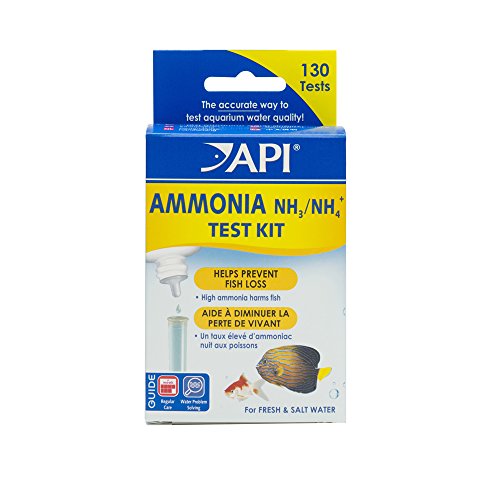
The API ammonia test kit provides a precise reading for ammonia levels from 0 to 8 ppm. It includes two bottles of testing solution, two color cards, and a test tube with cap. Best for hobbyists who want a traditional liquid test method with clear color comparisons. Choose this if you prefer a familiar, step-by-step testing process for regular ammonia checks in both freshwater and saltwater setups. A limitation is that it requires careful handling and timing to ensure accurate results.
AAwipes 8-in-1 Aquarium Test Strips (50)

This kit offers eight parameters, including ammonia nitrogen, with fast results and high-contrast color charts. Best for routine monitoring in both freshwater and ponds, especially when you want quick checks across multiple tanks. Better for readers who value speed and simplicity over absolute lab-like accuracy. A caution is to read pads 1-7 and pad 8 separately for ammonia to avoid misreading.
Seachem Ammonia Alert 1 Year Monitor (3 Pack)

The Seachem Ammonia Alert uses sensor technology to continuously detect free ammonia without test kits or liquids. Best for hobbyists who want constant awareness with minimal maintenance. This three-pack can cover multiple tanks or provide standby units. A limitation is that it provides continuous readings rather than a numeric value in ppm, so you rely on the visual alert level for action.
AAwipes Aquarium Ammonia Test Strips (100)

This 100-strip kit mirrors the 50-strip version, offering 8-in-1 testing with a focus on ammonia nitrogen. Best for hobbyists maintaining several tanks or needing frequent monitoring. It provides quick results in minutes and aims for up to 99% accuracy when compared to the color chart. A potential drawback is handling a larger strip batch and ensuring proper storage to maintain strip integrity.
HOVIRAN Ammonia Test Strips (50 Count)

HOVIRAN provides a budget-friendly option with 50 strips designed for ammonia nitrogen testing. Best for hobbyists on a tight budget who still want reliable ammonia checks. Choose this if you need low-cost, frequent testing across one or more tanks. A caution is that strips may show slight color variation between lots; always compare to the included chart carefully.
Buying Guide: How To Pick The Right Ammonia Tester For Your Aquarium
- Testing format: Liquid test kits (like API) offer precise numerical results but require more steps. Strips (AAwipes, HOVIRAN, SJ WAVE) are faster and easier but can be less exact and require careful color matching.
- Monitoring style: Do you want continuous monitoring (sensor-based, like Seachem Ammonia Alert) or periodic checks (strips or liquid kits)? Continuous monitors reduce hands-on work but may have higher upfront cost.
- Tank type and setup: Freshwater, saltwater, or ponds may demand different test parameters. Some kits include multiple parameters; others focus specifically on ammonia.
- Maintenance and replacements: Consider replacement reagents, calibration needs, and how often you’ll need to buy more strips or reagents. Sensor monitors require occasional calibration checks.
- Budget vs. accuracy: Strips are budget-friendly and convenient for frequent checks. Liquid tests and sensors offer higher reliability for critical periods such as cycling or ammonia spikes.
Frequently Asked Questions
- How often should I test ammonia? For new tanks, test daily during cycling. In established tanks, test weekly or after water changes or filter maintenance.
- What ammonia level is safe for most fish? Most healthy tanks aim for ammonia at or near 0 ppm. Some species tolerate very low levels briefly, but zero is the default goal.
- Which test type is best for beginners? Strips or all-in-one liquid kits provide straightforward results and easy interpretation for newcomers.
- Can I rely on a sensor monitor alone? Sensor monitors are helpful for continuous awareness but should be paired with a confirmatory test if a spike is detected or for calibration checks.
- Should I test only ammonia or other parameters too? Ammonia is critical, but testing pH, nitrite, nitrate, and alkalinity helps maintain overall water quality and fish health.
- What should I do if ammonia spikes? Perform water changes, check filtration, and verify source water quality. Follow test results with actionable steps based on your kit’s guidance.